What is NHS Continuing Healthcare in England?
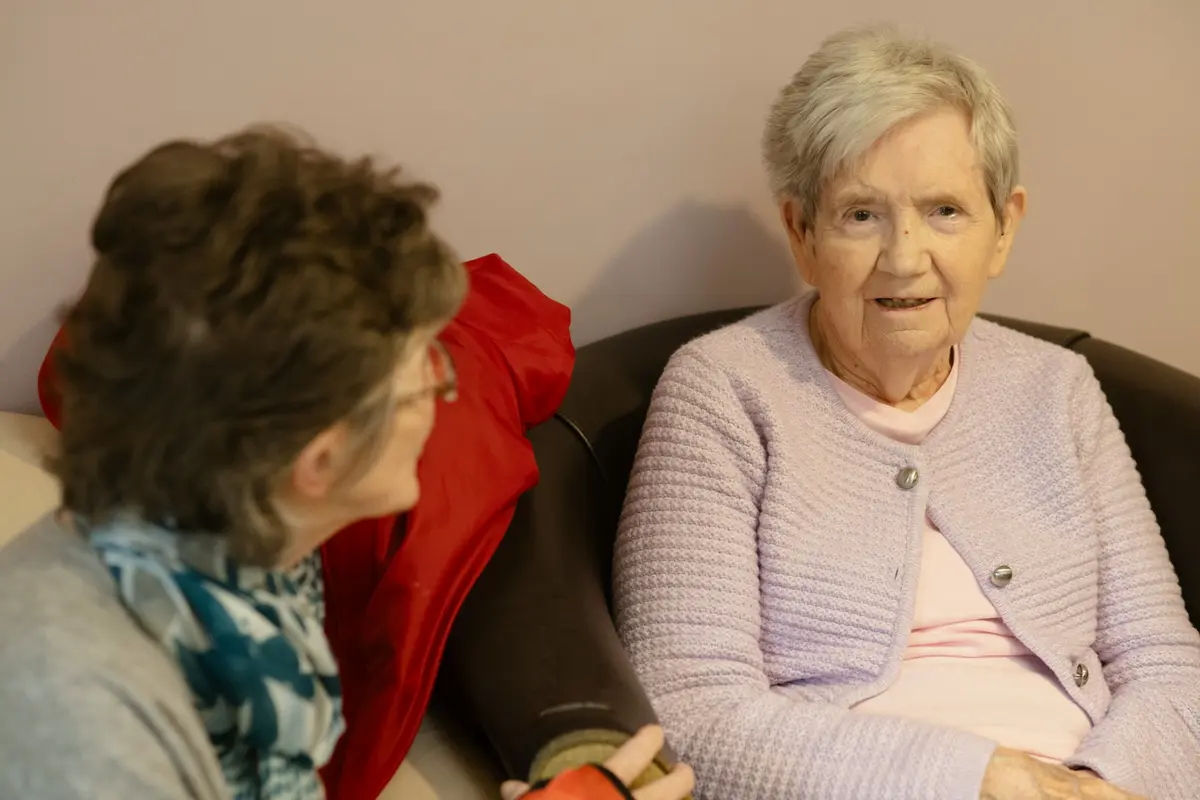
NHS Continuing Healthcare (CHC) is free care for adults in England whose needs are mainly health needs. The NHS arranges and pays for all of it, at home or in a care home, and it isn't means tested. A person qualifies if an assessment finds they have a 'primary health need'.
What does CHC stand for?
CHC stands for Continuing Healthcare, and its full form is NHS Continuing Healthcare. You'll also see it written as NHS CHC, CHC funding, continuing healthcare funding or fully funded care. In healthcare, CHC is the abbreviation used for this funding in assessment letters, care plans and hospital discharge notes about adults in England.
Two similar terms mean something different. NHS-funded Nursing Care (FNC) is a smaller weekly NHS payment towards nursing in a care home. And "continuing care" for children under 18 is a separate scheme with its own framework, which we cover further down.
What is NHS Continuing Healthcare?
The rulebook for NHS Continuing Healthcare is the National Framework for NHS Continuing Healthcare and NHS-funded Nursing Care. The Department of Health and Social Care publishes it. The current version is the July 2022 revision, corrected in July 2023, and it applies in England only. Its glossary gives the official definition.
How the National Framework defines CHC
"A complete package of ongoing care arranged and funded solely by the NHS, for adults with the highest levels of complex, intense or unpredictable needs, who have been assessed as having a 'primary health need'. It can be provided in any setting." (National Framework, glossary, page 167)
In plain words, a primary health need means an adult's care is mainly about meeting health needs, rather than help with everyday living. Where someone has one, the Framework says "the NHS is responsible for providing for all of that individual's assessed health and associated social care needs, including accommodation, if that is part of the overall need" (page 10).
The integrated care board (ICB) for the area arranges the care and pays for it. ICBs are the NHS bodies that plan and pay for local health services. Having CHC doesn't cut anyone off from other NHS services. The Framework says people who are eligible "continue to be entitled to access the full range of primary, community, secondary and other health services" (page 9).
Three tools go with the Framework: the Checklist, the Decision Support Tool and the Fast Track Pathway Tool. The Department of Health and Social Care updated all three in October 2026.
Who is NHS Continuing Healthcare for?
NHS Continuing Healthcare is for adults aged 18 or over whose needs have come about through disability, accident or illness (National Framework, page 9). What decides it is the person's needs. The Framework says "the diagnosis of a particular disease or condition is not in itself a determinant of eligibility" (page 24). So there's no list of qualifying conditions. Someone with dementia, Parkinson's, motor neurone disease or the effects of a stroke can be considered. Someone with several conditions and no single main diagnosis can be considered too.
The test is whether the person has a primary health need. The assessment looks at four characteristics of their needs: nature, intensity, complexity and unpredictability. The Framework says each one can show a primary health need "alone or in combination" (pages 23 to 24). Our guide to the CHC eligibility criteria explains each characteristic with examples.
The first step is usually the NHS Continuing Healthcare Checklist, a short screening form. The Framework says a Checklist would be expected whenever someone needs a long-term place in a care home with nursing. The same goes for someone with significant support needs (page 41). If your relative is moving into a nursing home, or needs a lot of care at home, it's worth asking whether CHC has been considered.
What about children and young people?
Children have a different scheme. Up to their 18th birthday, their needs are assessed against the National Framework for Children and Young People's Continuing Care (January 2016). The assessment leads to a recommendation to a multi-agency panel. In children's services, "continuing care" means extra health support beyond what GPs, hospitals and community services routinely provide. The adult Framework says eligibility for children's continuing care "does not pre-suppose eligibility" for adult NHS Continuing Healthcare (page 105). So a young person moving to adult services is considered under the adult rules.
What does NHS Continuing Healthcare pay for?
NHS Continuing Healthcare pays for the care the person has been assessed as needing, and what that covers depends on where they live.
In a care home, including a nursing home, the NHS pays for the care and the accommodation. That's because the place in the home is part of the assessed need. The ICB pays the fees.
At home, the ICB is responsible for meeting all of the person's assessed health and associated social care needs. The Framework gives these examples:
- equipment
- routine and incontinence laundry
- daily domestic tasks such as food preparation, shopping, washing up and bed-making
- support to get out into the community
- extra support while a carer has a break
The NHS doesn't pay for rent, food or normal utility bills. These are expected to come from the person's own income or benefits (page 95).
There's no set weekly amount for CHC. The package follows the person's needs, so two people with CHC can have very different packages, each paid in full.
Is NHS Continuing Healthcare means tested?
No. The National Framework says "financial issues should not be considered as part of the decision on an individual's eligibility for NHS Continuing Healthcare" (page 24). Savings, income, pensions and the family home make no difference to whether someone qualifies.
Council-funded care works differently, because it's means tested. For 2026 to 2027, someone with more than £23,250 in capital pays the full cost of a care home themselves. Between £14,250 and £23,250, they pay from their income plus a contribution from their capital. Below £14,250, they pay only what they can afford from their income (DHSC circular, 17 February 2026). Our guide to who pays for care home fees sets out how the three routes fit together.
How is CHC different from FNC and council funding?
Families often hear about three kinds of funding in the same meeting. The table puts them side by side, so you can tell which one is being discussed.
| Question | NHS Continuing Healthcare | NHS-funded Nursing Care | Council-funded care |
|---|---|---|---|
| Who pays | The NHS, through the ICB | The NHS, paid to the care home | The council, with a contribution from the person |
| What it covers | The whole assessed care package, including care home accommodation | A contribution towards care from a registered nurse | Care and support the council assesses as eligible |
| Means tested | No | No, it depends on the need for nursing care | Yes, with capital limits of £23,250 and £14,250 |
| Where | Any setting, including home, a care home or a hospice | Care homes with nursing only | At home or in a care home |
| How it's decided | A Checklist, then a full assessment with the Decision Support Tool, then the ICB decides | After CHC has been considered, when the person needs a registered nurse and a care home with nursing suits them best | A council needs assessment and a financial assessment |
| How much | No set amount, since it follows the package | £267.68 a week standard rate from 1 April 2026 | Depends on the care package and the means test |
Sources: National Framework, pages 9, 24, 85, 95 and 167. DHSC local authority circular, 17 February 2026. DHSC announcement on nursing care rates, 9 March 2026.
One rule protects families here. The Framework says "in all cases individuals should be considered for eligibility for NHS Continuing Healthcare before a decision is reached about the need for NHS-funded Nursing Care" (page 9). If your relative has been given FNC without a CHC Checklist, ask why.
Where can NHS Continuing Healthcare be provided?
Wherever the person's care is provided: their own home, a care home, a hospice or another setting. The Framework says eligibility "is not determined or influenced either by the setting where the care is provided or by the characteristics of the person who delivers the care" (page 24). Your mum or dad, living at home with visiting carers, is assessed on the same test as someone in a nursing home.
The setting does affect when the assessment happens. The October 2026 Checklist guidance says the full assessment should normally take place in a community setting, preferably the person's own home. The Framework says most people should be screened in a community setting too (page 41). If your relative is in hospital, ask the discharge team when and where the CHC assessment will happen.
Who decides on NHS Continuing Healthcare?
The integrated care board for the area decides. Since 1 April 2026 there have been 36 ICBs in England, according to NHS England.
The decision follows a full assessment by a multidisciplinary team (MDT). The Framework defines this as at least two professionals, usually from both health and social care (page 167). The team completes the Decision Support Tool (DST), the form that records the person's needs, and recommends a decision. The ICB should follow it except "in exceptional circumstances, and for clearly articulated reasons" (page 54). If the answer is no, the ICB should explain how to ask it to look again. Beyond that, you can go to NHS England and then the Ombudsman. If you've had a refusal, our CHC case review starts with us reading the decision letter and the records.
CHC in numbers
In the 12 months to September 2026, 8,950 of 51,327 standard CHC assessments in England found the person eligible. That's 17.4% (NHS England quarterly data, published 12 November 2026, our sums). Rates vary a lot between ICBs. NHS England says the variation has many causes, including age, health needs and other local services.
What do NHS Continuing Healthcare cases look like?
These examples are invented
The three people below are made up to show the kind of needs an assessment looks at. They aren't real people or our clients, and they don't predict any outcome.
Arthur, 79, has Parkinson's and lives at home
Arthur's tablets have to be given at exact times, and when a dose is late he freezes and falls. He chokes on thin drinks, so a speech and language therapist has set out how he should be fed safely. His wife and a team of carers cover the day and the night. The assessment would look closely at his medication and symptom control. That's one of four areas where the assessment can record its highest level, called priority. It would also look at his eating and drinking and his mobility.
Margaret, 88, has dementia and lives in a care home
Margaret hits out at staff during personal care, in a pattern they've learned to manage with two carers and a calm routine. She has lost weight without meaning to and needs help at every meal. Most of the time she doesn't know where she is. Because the staff manage her behaviour well, her notes can make her look settled. This is where the Framework's rule matters most: "well-managed needs are still needs" (page 51).
David, 70, had a major stroke and lives in a nursing home
David is fed through a tube into his stomach and can't reliably tell anyone what he needs. He has a pressure sore that isn't healing despite treatment, and nurses turn him through the night. The assessment would weigh these needs together, rather than one at a time. It would look at how they interact and the skill it takes to meet them.
What should you do if you think CHC applies?
Our CHC funding guide covers the whole process in detail. In short, it looks like this:
Ask for a Checklist
Ask the GP, social worker, hospital discharge team or care home nurse, in writing, for an NHS Continuing Healthcare Checklist. You can also ask the ICB directly.
Write down the needs
Keep a dated diary of the care your relative needs, day and night, and gather the care plans, charts and letters.
Take part in the Checklist
Ask to be there when it's completed, and ask for a copy with the reasons for each score.
Get ready for the full assessment
After a positive Checklist, the ICB should normally decide within 28 days of receiving it (National Framework, page 55). Use that time to match your evidence to the needs being assessed.
Our guide to the CHC Checklist explains the screening form area by area. If you're not sure whether CHC applies, our free check asks a few plain questions about your relative's care. And if your family paid for care in the past that was never assessed for CHC, read our guide to retrospective CHC claims.
Questions families ask
Is CHC the same as continuing care?
Not quite. People sometimes say continuing care when they mean NHS Continuing Healthcare for an adult. For children and young people under 18, continuing care is a separate scheme with its own national framework. The National Framework says eligibility for children's continuing care doesn't mean a young person will be eligible for adult CHC.
Does NHS Continuing Healthcare cover children?
No. NHS Continuing Healthcare is for adults aged 18 or over. Up to their 18th birthday, children are assessed under the National Framework for Children and Young People's Continuing Care (January 2016). The National Framework expects the ICB to decide eligibility in principle soon after a young person's 17th birthday, if they're likely to need adult CHC. That way, care can be ready at 18.
Is NHS Continuing Healthcare free?
Yes. CHC is arranged and funded solely by the NHS, and it isn't means tested. The person pays nothing towards the care they've been assessed as needing. In a care home, the fees are covered, including accommodation. At home, the NHS doesn't pay for rent, food or normal household bills. These still come from the person's own income or benefits.
What's the difference between CHC and FNC?
CHC pays for the whole assessed care package, in any setting. NHS-funded Nursing Care (FNC) is a fixed weekly NHS payment to a care home with nursing. It goes towards the cost of care from a registered nurse. The standard rate is £267.68 a week from 1 April 2026. The National Framework says a person should always be considered for CHC before any decision about FNC.
How is NHS Continuing Healthcare funded?
It's paid for by the NHS through the integrated care board (ICB) for the area. The ICB arranges the care and pays for all of it, whether that's a care home place or a package of care at home. People with CHC also have a right to a personal health budget. This is where the person and the NHS agree how the money for their care is used.
What is a care package on the NHS?
A care package is the set of care and support arranged to meet someone's assessed needs. It can include visits from carers, nursing, equipment or a place in a care home. With NHS Continuing Healthcare, the ICB arranges the package and pays for it. The package should be reviewed within three months of the eligibility decision, then at least once a year.
This is information, not legal advice. It explains the rules for England, which are set out in the National Framework for NHS Continuing Healthcare.
Sources
- National Framework for NHS Continuing Healthcare and NHS-funded Nursing Care, Department of Health and Social Care, July 2022 revision, corrected July 2023.
- NHS continuing healthcare checklist: guidance, Department of Health and Social Care, published 20 October 2026.
- NHS continuing healthcare decision support tool: guidance, Department of Health and Social Care, updated 22 October 2026.
- National Framework for Children and Young People's Continuing Care, Department of Health, January 2016.
- Social care charging for care and support 2026 to 2027: local authority circular, Department of Health and Social Care, 17 February 2026.
- Better community care thanks to nursing funding boost (NHS-funded nursing care rates from 1 April 2026), Department of Health and Social Care, 9 March 2026.
- NHS Continuing Healthcare and NHS-funded Nursing Care quarterly data, Q2 2026/27, NHS England, published 12 November 2026.
- Integrated care in your area, NHS England, map updated April 2026.